Use & Handling
Preparation
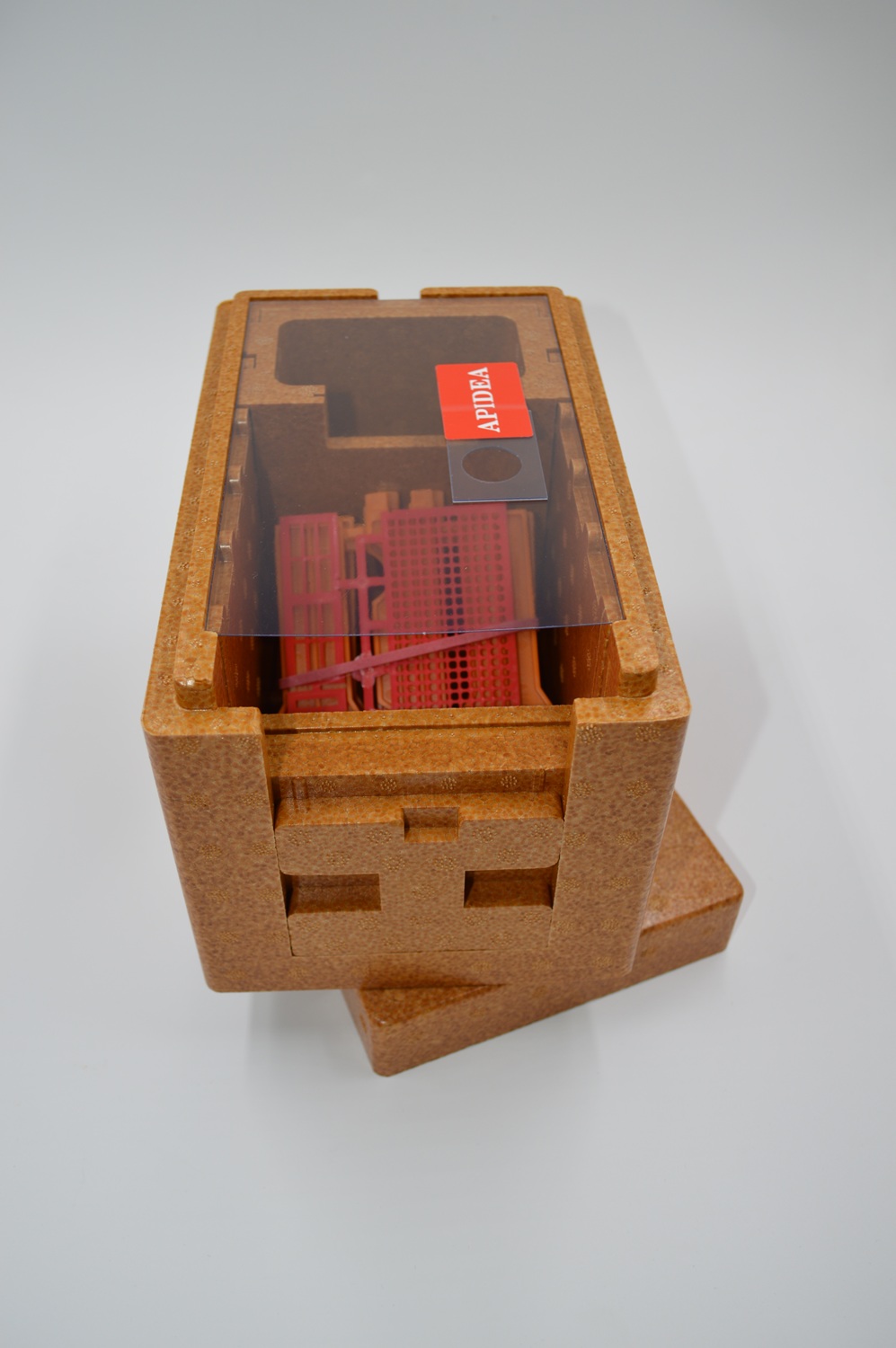
The supplied frames are assembled and fitted with wax starter strips. They are then placed into the APIDEA Mating Nuc so that a circle is formed around the opening for the queen cell protector cage.
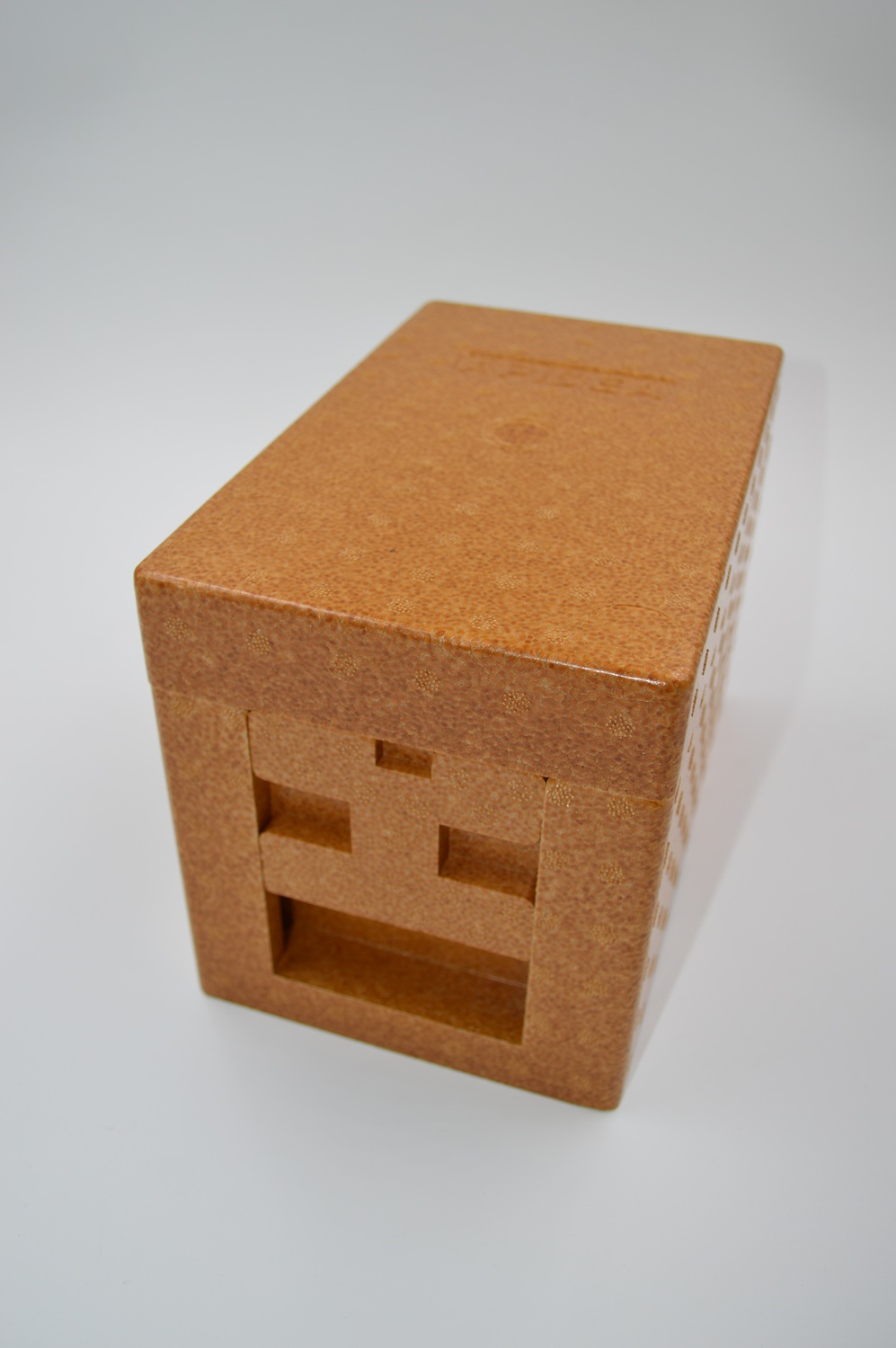
Next, the aeration screen and excluders are inserted into their designated positions. The inhive feeder is filled with fondant to just below the rim. Finally, the interior transparent cover is placed on top and the Mating Nuc is closed with the cover.
Populating the Mating Nuc with Bees
To populate the APIDEA Mating Nuc, turn it upside down and open the sliding bottom until the brood area is fully exposed. Approximately 100 g of young bees are then introduced using a soup ladle or a large cup.
To keep the bees calmer and reduce flying, it is recommended to lightly mist them with water beforehand. After filling, close the sliding bottom and place the Mating Nuc in a cool location.
Introducing the Queen
A ripe queen cell ready to emerge or a newly emerged virgin queen can then be introduced through the insertion opening in the interior transparent cover. The Mating Nuc should continue to be kept in a cool location.
To ensure adequate humidity, the aeration screen above the closed entrance should be lightly sprayed with water several times a day.
Confinement Period and Placement
After three days of confinement in a cool, dark location, the APIDEA Mating Nuc can be placed in the evening either at a mating station or in the home apiary. Raise the front slider fully to allow the bees to fly out.
Inspecting the Young Queen
After approximately ten to fourteen days, the Mating Nuc will normally contain a successfully mated young queen. The queen should then be assessed for quality and the brood nest inspected for regularity and uniformity.
Expanding the Mating Nuc
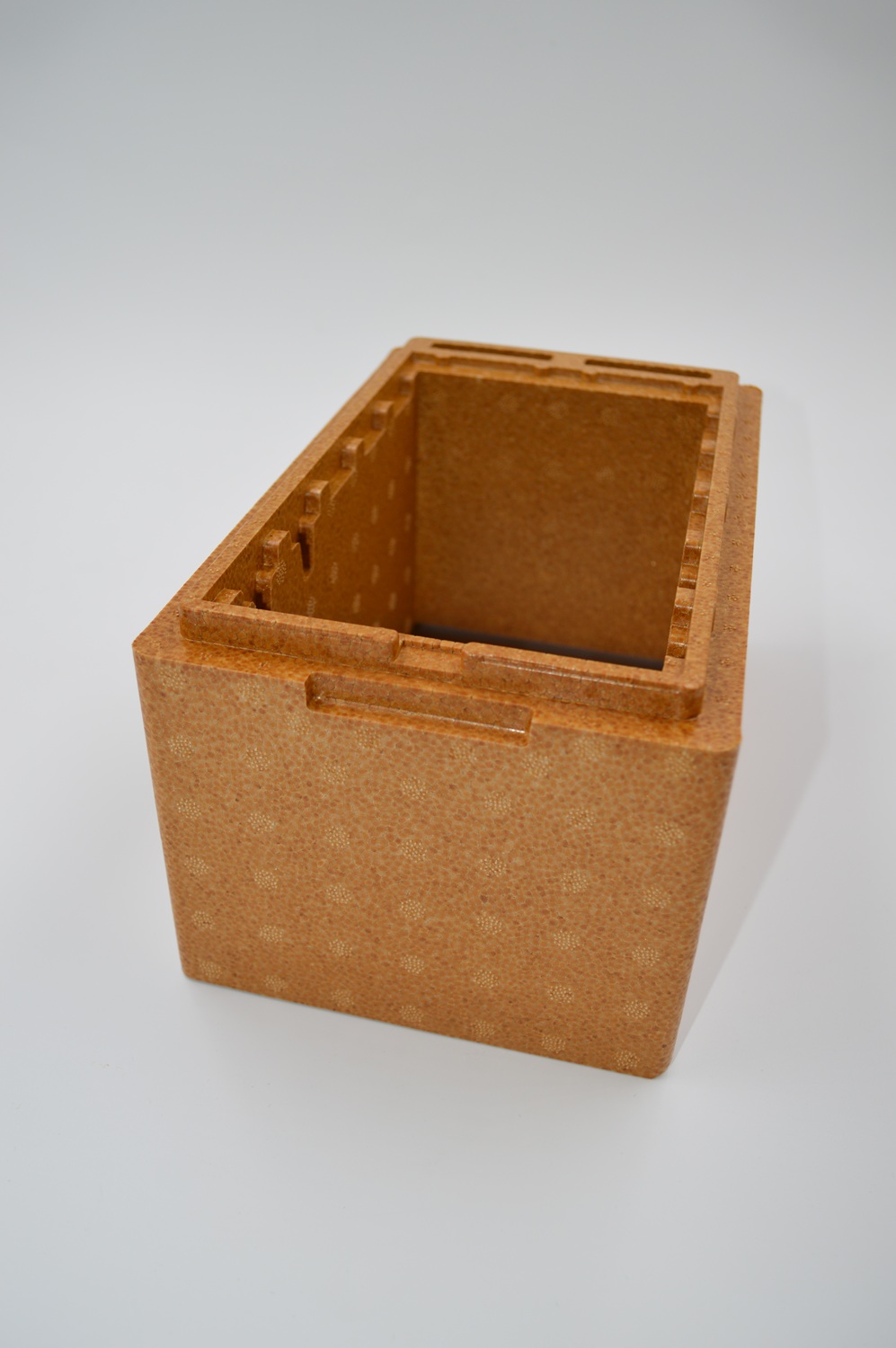
If the colony is to remain in the Mating Nuc for a longer period, the available brood space can be expanded as needed. First, remove the inhive feeder and replace it with two frames fitted with wax starter strips.
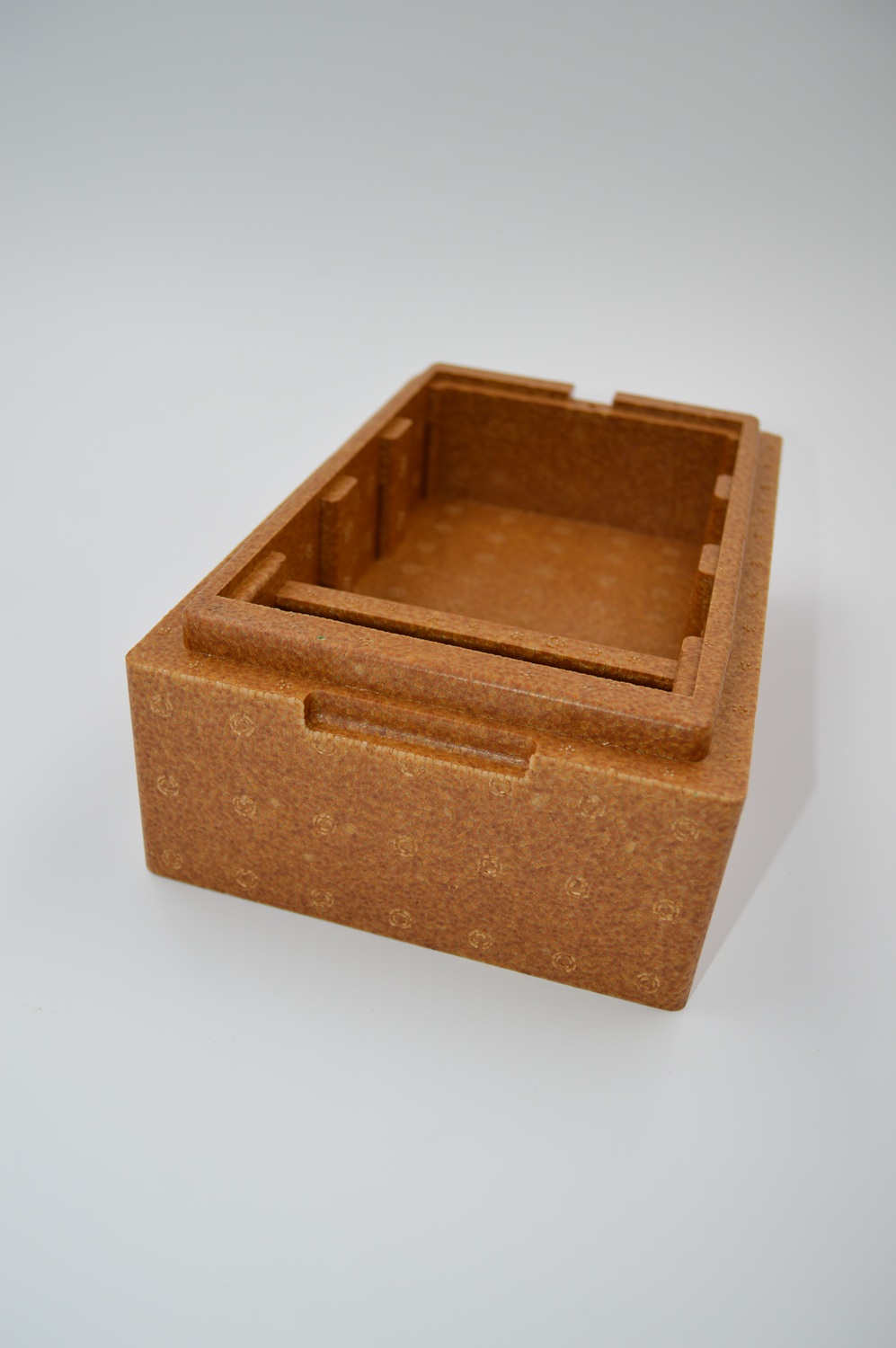
The APIDEA Top Feeder can then be filled with fondant and placed directly on the Mating Nuc. Alternatively, the APIDEA Brood Chamber with five additional frames can be added first. The Top Feeder is then filled with fondant and placed on top.
Cleaning the APIDEA Mating Nuc
Clean the APIDEA Mating Nuc using warm water and cleaning agents approved for beekeeping use. Not all components are resistant to boiling water or acids.
The manufacturer accepts no liability for damage resulting from improper cleaning.